Search

Tom Ramsey for Council signBrother Tom Running for Council 

Extra Christy remote support bannerGet Remote Support


Churches

9:30 AM September 6, 2026
First Presbyterian Church
196 S. “C” Street
Virginia City, NV 89440
Website

10:00 AM September 27, 2026

Lee Vining Community
Presbyterian Church
126 Mono Lake Avenue
Lee Vining, CA 93541
Website

10:00 AM October 25, 2026
Lake Tahoe Community
Presbyterian Church
2733 Lake Tahoe Blvd.,
South Lake Tahoe, CA 96150
Website


ExtraChristy Sermons
on Amazon Music


ComputerCorps

I am at ComputerCorps various times; often Monday mornings and Wednesday afternoons.


Taking tech calls on
BATTLE BORN TECH℠
radio show 

Call Saturdays 9-11 am Pacific
or Sundays 7-9 pm Pacific
for FREE TECH ADVICE! 775-241-3571
Calls Broadcasted on FM 95.1
Tuesdays at 8 PM Pacific
Streaming live on knvc.org

BattleBorn.Tech℠

Listen to
Battle Born Tech
Radio Show
every week on
these podcast players


 Links above are for Battle Born Tech Radio Show NOT this blog, extrachristy


11662 Hope Court, Truckee, CA

Set back in the woods near the corner

of Hwy 267 and Brockway Road

Navigation

Entries in Matthew (7)

Sunday
Jun282026

World Cup of Cold Water

World Cup of Water

World Cup of Water

a welcome sermon by Rev. J. Christy Ramsey

DOWNLOAD A LIVE RECORDING

Audio from worship at the 10:00 AM Worship Service June 28, 2026
at St Peter’s Episcopal Church, Carson City, Nevada

edited from a flawless transcription made by edigitaltranscriptions all errors are mine.

Scripture read on Audio: Matthew 10:40-42

  Sermons also available free on iTunes

Good morning, Episcopalians.

Good morning, Christy.

Maybe a little bit. Oh my gosh, you would never get past the World Cup fandom with that. Come on, now. Haven’t you seen those fans? You know they’re doing the rowing thing? Who’s seen the rowing thing? That’s something. And here we are, look at this. We’ve got a scripture, four verses. What am I going to do with four verses? I never – I never get a good parable. I mean, all I – is that too much to ask? A nice story? Homey illustration, something? No, I get four verses. And it’s all about welcome. Did you see that? In four verses there’s four times we’re talking about welcome. And we end up talking about a cup of cold water, which works out great for once because I’m going to talk about the World Cup of cold water. Right? See how that works? Yeah, isn’t that nice? They had a whole big thing just so I could get a sermon’s thing. That’s great. Yeah, World Cup of cold water.

You know that welcome stuff. You know, you think, what is welcome? I don’t think we’re really good at it. We’ve had an opportunity to see what that is. Would you say that we’re a welcoming people, welcoming society, a welcoming country? What would you say?

It’s kind of challenging. Because welcome isn’t just toleration. It isn’t just “I suppose I could put up with them.” Welcome is, in the Greek, is talking about receiving. Almost a gift. As if to receive the gift. Someone coming in to you. You’re receiving this gift. And also in that word is to make room for someone. To welcome someone is to make room for them and allow them to come into your life as a gift. Did you see that welcome, welcome, welcome? I hope it’s easy to fall into. I know I do this when it says when they welcome you and they welcome you, I go, oh, my gosh, good job, you know, you all be nice to me, you get some reward. Eh.

There’s another side to that. Are we welcoming on that side? Who do we welcome? Because if you welcome someone, then you get a blessing. Maybe we ought to be looking for the welcome, doing the welcoming instead of being welcomed. I mean, that’s kind of where he’s leaning; isn’t it? He’s talking about welcome. Now, have you seen Japan? Have you checked out the Japan team? Have you checked those out where those – have you see the blue bags? You’ve really got to get on YouTube and watch some of these. Don’t watch the game. Who knows what’s going on there. But you can watch the fan stuff. The Japanese, when they go, they bring these blue trash bags, and they’re going bah with the blue trash bag. You go, okay, well, that’s a thing. All right.

But they actually – they played against the Netherlands. The Netherlands won. They went outside and, you know, are screaming and yelling and stuff. And the Japanese fans, they stayed. And they cleaned up the stadium. That’s what they do. That’s what those blue bags are for. They go through and take off all the trash. Not just their own. They take out everybody. They leave the place spotless. And the locker room? The locker room was immaculate. Towels folded, everything going, ready for the next welcome. Making room. Making space. Giving a gift. World Cup of cold water.

They don’t know who’s coming in those stands next. They don’t have anything to do. They weren’t required to do it. You know, in Japan, in the schools, believe it or not, there is no custodians in the schools in Japan, from elementary school on. No custodians. No one has that job. Now, I don’t know if you’ve been around small children. Or, God forbid, middle-schoolers. You know, you might say, ooh, how does that work out? Works out very well because they are trained from childhood and into adulthood to take care of the spaces they are in. They do their own cleanup. Not just bus the table. They clean the restrooms. They clean the floors. They clean the rooms. They make everything good for the next person to come up. Welcome. Welcome. In the Greek it is dechomai (δέχομαι). Making room for others.

What about those others? Who are they? We’ll get back to that. Who’s welcome to you? Who in your life has made room for you when you needed it? I know one. His name’s Jim White. I went to his Celebration of Life last week. A week ago tomorrow. And I recall they were talking stories about Jim. And again and again this came up, and this is my story about Jim. I came to Nevada here. Every other time I moved somewhere, it was my choice, my pick. I was inserted into a church, you know, and I had social stuff, I had a calendar, I had friends, I had people telling me who – I had one church that told me I’ve already told the hairdresser down the street that you’ll be down there for all your haircuts. So I hope that’s okay. You know, I was really taken care of.

Come to Nevada, no job, no church. I come 2,600 miles. I left 30 years of minister relationships and connections through four Midwestern states, working with presbyteries and synod and general assembly. That’s, yup, going on up. I even preached at a synod meeting once. That was a trip. They didn’t know what to do with me. Apparently they had the video camera fixed on one spot, and that didn’t work really well. And that was back when they were like, you know, 80 pounds. So the guy’s running around hefting it. I enjoyed it. I don’t know if he did. But I came here, I didn’t have any of that. I didn’t have a place. I didn’t have social contacts. I didn’t have anything to do. I didn’t have a job. I didn’t have a church. It was kind of – and Nevada’s a little different than the Midwest. I don’t know if you all have been told that.

You do? Maybe? My favorite Nevada story is that you get pulled over by the cops so much more here, at least I do. I don’t think I’m driving worse. Maybe. I don’t think so. But in Ohio, where I grew up, unless you had your hand out the door and you were actively shooting your gun at people, the cops left you alone. That was the standard. Here I got pulled over for lane changes, you know. Okay. You know, and my story about Nevada is that the cop will come up to you, and then say, “Son, do you have a weapon in your car?” And I said, “Well, no, officer.” And he says, “Okay, you can borrow mine till you get one.” Little different in the Midwest. Little different kind of welcome.

So I was out of sorts. And somebody in the presbytery was retiring from a small church and said, “Christy, come on down, you know, I’m leaving, you’re here, let’s see if we can do something.” It was pretty nice of him. I go down there, I go to the church meeting, and I’m sitting at one end of the table, he’s sitting at the other end of the table, and I swear by all that’s holy the two factions of the church were sitting on opposite sides of the table with death stares at each other. And the whole interview was whose side are you on? Are you on our side or their side? I tell you, I wasn’t ready for that. I don’t know if I’d ever be ready for that. Come on in and referee this church fight. I passed. And guess what, they passed on me, too. It was not a good experience.

But a month later, I get a call from someone I didn’t know, Jim White. And he goes, “Hey, I’m Jim White. I’m a member of the church you interviewed in.” Okay. I mean, this was long gone, over and done, never to be seen again. You know, do not call, do not write, you know. Block the calls, you know, spam likely, all that. And he calls up, said, “Hey, I’m really sorry the way our church treated you.” He wasn’t even there. He was in Arizona.

A month later he comes back, finds me, calls me up, says “I’d like to take you to lunch.” Well, I couldn’t say I was busy. So we went to lunch. And Jim proceeded to apologize for the way the church had treated me. He wanted me to know that I was welcome here, and he was glad that I was here, and he thought I should have been treated better. He had nothing to do with any of that. He didn’t do anything wrong. He wasn’t even there. But he listened to me about, you know, what I was doing and where I was going.

There was no reason for him to do that. No profit for him to do that. No ulterior motive. I’m not going to go be the savior of his church or anything. He just saw someone that got treated wrong, and he wanted to treat him right. And at his memorial I found he did that all his life. He found people that were treated wrong, and he made it right, as much as he could.

I hope you have many Jim Whites in your life. And you know what else? I hope you decide that you’re going to be Jim White. You’re going to be a welcoming, dechomai (δέχομαι). Doesn’t take much. Cup of cold water. That’s a lot on a hot day. But it isn’t building a cathedral. It isn’t giving them a job, a career. It isn’t saving them from divorce or worse. Just making room for them.

Hey, you know what he said? Mikros (μικρός), which is little ones. And you think, oh, children. No. Maybe. Sometimes it’s how tall they are. But really it’s a lot more of that. It’s how much space they take up. Welcome. Make space for the ones that don’t have any. Make room for the ones we’ve shoved away and welcome them dechomai (δέχομαι). Maybe it’s that neighbor that moved in five years ago, and you’ve never talked to them or said hello. Maybe that’s it. Maybe it’s something like that.

For some people, it’s going down to a prison, where people don’t have water or food or sanitation. Standing outside, letting them know they’re not forgotten. Making room for them. Sometimes at the risk and at the cost of their life. That’s dechomai (δέχομαι). That’s welcome. Let’s give it a cold water. People don’t have space here.

10,000 people became illegal overnight. You say, well, they should follow the law. Well, they were following the law until yesterday, but now today they’re illegals. You say, don’t talk politics, Christy. I’m talking morality. Don’t get your politics in my morality. We have a higher standard. There’s someone we need to make room for.

I don’t know where you are or what you’re doing or where you’re going. But I do want to say that every time the disciples in Matthew talk about grandeur and who’s the best, and what’s the best way to be, and am I number one or number two. Or am I the best Christian, or where are we going to – who’s going to be tops in Kingdom of Heaven when you come in the kingdom. Jesus always takes them down from their big expansive dreams and space and says, “The least of these, the little ones, the ones who don’t have space. When you do it to them, when you focus on them, you’ve given it to me. That’s where you find me. You don’t find me in power. You don’t find me in fear. You don’t find me in strength. You find me when you welcome the least of these.”

Well, it can be anything. Maybe it’s cleaning up after everybody else, even though you don’t have to, even though you’re not paid. Or so the next person don’t have it. Maybe it’s helping someone that’s a little confused about the language and the ways here. Whether they’re from another country or just from the Midwest.

Had four verses today. And four times Jesus said “Welcome.” Welcome, welcome, welcome, welcome. And that last bit isn’t an afterthought. It’s who we welcome. Mikros (μικρός), the little ones. Welcome dechomai (δέχομαι) is for the Mikros (μικρός), welcome the least of these. The little ones. The ones that don’t have room. Make room for the ones that don’t have room. Do that, and you’ll be welcoming Christ. Amen.


 

World Cup of Water

Sunday
Nov262023

Surprise Judge

Surprise Judge

Surprise Judge
a sermon by Rev. J. Christy Ramsey

Text from 8 AM service Worship Service Novmeber 26, 2023

at St Peter’s Episcopal Church

edited from a flawless transcription made by edigitaltranscriptions all errors are mine.

  Matthew 25:31-46

 Sermons also available free on iTunes


Surprise. This scripture’s about surprise. And you may think, which one? Because there’s many. Some of you, and I’m trying not to look at you again, some of you are shocked, dismayed, perhaps threatened that he said to those on the left are cursed and go to hell. The left go to hell? What? What? That doesn’t sound like us. But calm down because remember he was facing them. So the left was on the right, and the right was on the left.

That’s not the surprise. Well, what’s the surprise? Well, there’s a big surprise there, two surprises, in both groups of people that come up to the judgment. One, they were surprised; and they said, what, us? When did we see you hungry or thirsty or naked or in prison or thirsty, and we did not care for you? When did that happen? It’s so surprising that that happened. And the other group said, when did we do that? And we did take care of you. Even the ones who took care and did the work are surprised. Why are they surprised?

Whenever Jesus tells a story – and this is more of a story than a prediction or a prophecy, it’s more of a story – you always look for the weird part, the surprising part, the part that doesn’t make any sense. Because that’s the part that’s God, when it doesn’t make any sense. How in the world do people not know how they live their life? I mean, America is all about a personal relationship with Jesus Christ. You know, I have a personal relationship with my savior, Jesus Christ, and he is my personal king. You know, the whole king thing. You know, I have a king, and that’s a surprise, as well, the king stuff. What? King? Wait a minute, Christy. That sounds political. Can’t have any of that. Can’t have any of the nations and all that. That’d be political.

Well, yeah. It is political if and only if your politics are that the sick should suffer, be in prison, should languish. The hungry should starve. And the thirsty shall go without water. If that’s your politics, if that’s your platform, if that’s what you run your candidates on, well, then, yes, taking care of those in need is political. But if it is, we’ve got a long way to go. Because taking care of those that need care shouldn’t be a political debate. But that’s not the surprise. None of that’s the surprise.

The surprise is that this scripture isn’t talking to me and thee. It’s talking to we and us. What? It’s not about a personal king and salvation that is my personal lord and savior? And we can’t just say to Jesus when we go up to heaven, and say, hey, Jesus, I did a good life, I didn’t oppress anybody, I didn’t do any racial profiling, I didn’t hold down anybody, I didn’t throw anybody out on the street. I didn’t make anybody – I am going to heaven then. No, the surprise is it’s everyone who’s gathered, the nations of the world and the peoples are judged, and everything in here is plural.

That’s a surprise. What? We’re not going to be judged on our personal relationship with Jesus Christ as our lord and savior? Apparently not. How did y’all, be nice if we had that plural, how do you y’all treat the ones that need the most care? That’s how you get judged. Wow. That’s a surprise. I thought I just had to keep myself, you know, reasonably a good person, and I have a reasonable chance of going to heaven, with everybody else on the left who are on Jesus’s right. But it turns out not. The whole Christ the King Sunday is not about a personal relationship between me and a sovereign.

And if you think about it, a king thing, everybody doesn’t get their own personal king. That’s really not how the king thing works, royalty works. The king, the royalty, the sovereign is for the whole nation. It’s for all the people. It’s not just for, well, I have a king, and then that person over there has another king, and that person has another king. We all have our own kings. We would like it to be that way, individualistic and just dependent upon ourselves.

But oh, my gosh, that whole love one another as I have loved you, do unto others as I would do unto you is actually something he expects us to do. That’s the surprise. That’s a surprise. We can’t get away from it. We live and participate in a society that doesn’t help the imprisoned. You know in prisons they can’t make phone calls? They have to stand in line, do the old collect call and pay hundreds, pay bunches of dollars and fistfights and all that, when they all have tablets, and they could just call on their tablet and actually see their loved ones. But that’s not allowed. That’s us. That’s not the prisons. That’s not the politicians. It’s us, according to the scripture. Us.

When were you in prison, didn’t let people visit you? Oh. Every time it happens within the group we’re in? That’s a surprise. When are there times when people can’t get the care they need when they’re sick because of politics of sickness? Why is it okay for the government to do healthcare for those over 65, that’s okey-dokeys, but those under 65 it’s terrible, awful communism, I don’t know what political thing. What is it?

What if we had Medicare for all? What if all the insurance companies who I have a hard time finding anybody that says, you know, I love my medical insurance company. They are a source of joy and comfort in my life. No. And you say, well, that’s not my worry. That’s not my concern. I help out. There’s a guy with a cardboard sign, I give him five bucks. You know, I helped someone to the hospital the other day. I looked out on my neighbor. Nope. Nope. I’ve got a surprise for you. It’s how the whole group talks.

Gee, Christy, I just talked to you about – you were talking about kings today, about maybe flags in the sanctuary, maybe about who gives our – we give our allegiance to. Unh-unh. Not that easy. It’s not individualistic. It’s communal. This scripture is surprising. And I urge you to be surprised by it and go out and work for peoples and nations and lands where those that need care are taken care of. And it’s not political. It’s religious. Amen.


Sunday
Aug272023

You Rock

You Rock

You Rock
a sermon by Rev. J. Christy Ramsey

DOWNLOAD A LIVE RECORDING

Audio from worship at the 10 AM Worship Service August 27, 2023
at St Peter’s Episcopal Church in Carson City, Nevada

edited from a flawless transcription made by edigitaltranscriptions all errors are mine.

Matthew 16:13-20


Sermons also available free on iTunes

Peter, Peter, Peter. What a shaky guy to build a church on. I mean, this guy, we know about him; right? He’s either way up there or way down here. I mean, Jesus calls him “Satan.” That’s not good. Why does he pick him? And we know he’s not his favorite. You know, there is the beloved disciple. Not Peter. And now this sermon is banned in Florida. Check.

So Peter gets into trouble over and over again. He denies Jesus. He’s telling Jesus he’s doing it wrong. Later on he tells him not to do things. He’s got the Satan thing going on. And just two chapters ago, now, I don’t know how that is in real-time because, you know, they didn’t really have the timeline and all this real-time clock stuff. But two chapters ago he did the whole, you know, falling in the lake kind of thing. You know, Jesus out there in the lake. It’s a great scene, wonderful time, very, very holy, storm, Jesus. Oh, things are great. And what’s Peter do? Horn in on the action. Hey, I’m coming. I’m getting me some of this. Out in the lake he goes, and of course, boop, down he goes. You know.

Well, you know, I’m thinking it doesn’t really say. This is not Bible. This is Christy. So, you know, you may want to move to the darkened corners of the church for a nap. But I wonder how those disciples felt about him? You know? You have this person, right, this person who is absolutely wrong but very sure of it. And you know that kind of people. You know, the less they know, the surer they are, like that makes up for ignorance. I don’t know. And if you don’t have that friend, it’s you. So, you know, think about that.

So, and I can’t imagine the disciples are happy with Peter. He’s always mouthing off, getting in trouble, showing off, showboating, like he’s the best; you know. And they’re fishermen, you know, they’re not, you know, some kind of – really I’m thinking they’re a little rough-and-ready kind of guys, I’m thinking. And I’m thinking, you know, they’re out there in the storm, trying to stay in the boat. And some guy says, “Oh, I’m going to get out of the boat and go walk to Jesus.” “Peter, we’re barely keeping alive. Stay in your seat. Get down. You’re rocking the boat.” “Guys and Dolls” reference, thank you for those who picked it up. And he goes out there and sinks like…A rock. A rock. I’m thinking that’s where he started getting the name Rock. I’m thinking it wasn’t Jesus at all. It was those fun-loving guys, the disciples. Can you imagine that, Mr. Showboat sinking away? Hey, how you doing today, Rock? Ha ha. You okay? Steady there. Watch out, there’s a puddle, ha ha ha. Rock guy, huh, get a load of him. And down he goes. Hey, remember this? You know. I’m thinking they gave it to him. And in front of Jesus, behind his back, I don’t know, it don’t matter because Jesus seems to know all the stuff, no matter what goes on.

So I’m thinking that Jesus knew about that. And Jesus took that slam, that label, that putdown, and said, yeah, you’re the rock. And on this rock I’m going to build my church. Isn’t that just like Jesus? Not to argue, but to transform? To take what we thought was so bad, so awful about ourselves, our biggest failure, our greatest shame, our imperfections, everything we thought we did wrong, our lack of faith, and said, “Yeah, on that is I’m building my church.” Boy, do we need that message today. I mean, everybody’s telling us who we are. They think they know.

I mean, our own school system is joining a suit in social media because of all the negative information and labels and bullying that’s coming in over Facebook and TikTok and all the other things that are out there that our kids have to deal with that we didn’t have to that tells them they’re not good enough, they’re ugly, or not pretty enough, or they’re not as good as they are, or they have to take that picture next. Even among school systems in the city is suing for, and rightly so.

And if it isn’t social media and the kids and the things, it’s the advertisers have got our numbers down. They’re tracking your web browser. They’re watching what you watch. They’re slicing and dicing you and putting in ads to make sure that you are the most susceptible to what they’re trying to sell. In fact, they’re selling you to others, saying would you like some Episcopalians interested in some fine wines? I’m just guessing. They would put the church roll out. It’s out there.

And it’s not just this. You know, politics is coming. Oh, my gosh, do they want to tell you who they are, who you are, and what you should believe, and how it is, and what you should be outraged about, and who you should be angry with, and how this thing’s world should be viewed. We need this Jesus today that says what you think is the worst is something God can use to build the best. And no other than the contemporary philosopher, Taylor Swift, says – yeah, that’s who I read. So deal with it. That’s okay. Yeah, you’re not getting any Jeff books of the saints up here. That’s coming, so brace yourselves.

Okay. Taylor Swift says an excellent speech in her concert. And one of the – the firm quote in there is she tells her fans, a lot of these young women who are told how to be and how to look and how to feel and how to act. Taylor Swift says: “You are not somebody else’s opinion of you.” You are not somebody else’s opinion of you. Boy, good old Simon needed to hear that when they were all calling him the Rock. Good old Taylor Swift.

Who are you? Who are you? I’ve come to the conclusion not everybody loves and memorizes movies as well as I do, and we’re working on that. But until then, there’s a movie called “Secondhand Lions.” Robert Duvall we’re going to see in a minute. And somebody – and he’s having a bad day. And somebody asks him, “Who do you think you are, old man?” Oh, don’t do that to Robert, even on a good day. “Who do you think you are, old man?” And this is Hub McCann’s answer. “That’s who I am.”

I remember having a spirited discussion with one of the patriarchs of the church about what picture should you put in an obituary? The dashing young soldier going off to war 40 years ago? Or the weathered, seasoned, bald man the last time we saw him? Who are you?

My father-in-law was Bruce Speegle. Bruce Speegle was the district engineer for PennDOT. They have hills there. They say mountains, but I will not insult you by saying they were mountains. But they have ups and downs. And the ups and downs, back in the day, came up with the idea, have you seen those runaway truck ramps, you know, where they have the little thing, and the big old gravel, and the pickup – the pickup. The semi is supposed to steer off there when they don’t have brakes and go into the gravel, and the gravel is supposed – this was controversial. This wasn’t going to work.

Now, Bruce was a district engineer. Wasn’t a truck driver. Didn’t drive a semi. And Bruce put one in. And oh, the things they talked about. Now, Bruce was a man of few words. On my wedding day, I spent the whole day with him, and he had plenty of opportunities to tell me what’s what and who’s for and whatever. And had every reason to because at that point this guy, most unlikely to be a minister, was going to seminary. He might have had some words.

But we had the rehearsal, and was doing like an hour to get the wedding done, rehearsal, and up and down. We had a family dinner, a lunch, very nice lunch, family lunch. We’re all sitting at the table, meeting everybody. And we went to the hotel, we changed for the wedding, all in the same room. We had the wedding, of course. And he was there. And then afterwards we had a reception into the evening. That whole time Bruce said two words to me: “Have fun.” That was Bruce.

Back to the runaway truck ramp. It wasn’t going to work. Boondoggle. Waste of time. Not say safe, ba da da, all that stuff. Bruce got it built, invited the press to a demonstration. Got the truck at the top of the hill. Got the brakes disabled. And when it was coming down the hill, Bruce was in the passenger seat. To this day, my mother-in-law is still angry. That’s who Bruce was. He didn’t have to say anything. He was in that truck. Down they went. And of course it worked. Bruce was an engineer. He did the math. He didn’t have to talk. That’s who he was.

There’s a movie out called “Barbie.” Perhaps you’ve heard of it. As I understand it, I’ve been told I must go see it by my daughter, who’s in her 30s. I don’t know when she became my parent, but okay. In it I understand Barbie wonders what she was made for. The ideals of – they play with the ideas of Barbie as perfection and success and rich and happy all the time. And suddenly she’s not.

I’d like to close with the song from the movie, from Billy Eilish, and close with the lyrics to “What Was I Made For?” And I hope you consider that, as well.

You Rock

Sunday
Aug302020

Bringing Forward What's Behind


Bring what is valuable about the past into a new future

Bringing Forward What’s Behind
a sermon by Rev. J. Christy Ramsey


DOWNLOAD A LIVE RECORDING

Audio from St. Paul’s Lutheran Church parking lot on August 30, 2020
edited from a flawless transcription made by edigitaltranscriptions; all errors are mine. 

Matthew 16:21-28


Sermons also available free on iTunes


Phone, glasses, Hearphones, and once my brother Tim.  That is the answer to the question, “What do you go back for?”  If I leave my phone, my glasses, or even this morning my Hearphones, my hearing aids, I go back for them and get them.  And one time, on the way to a very memorable church service, I left my brother Tim, and we went back for him.  What do you go back for?  What do you go back for to bring into the present and take with you into the future?

I gave out notecards to some of you, I hope you got them, it’s a Sankofa bird on the front.  You can take a look at it there.  It’s very small here.  But I hope you got yours.  If you look closely, it might remind you of those geese that are always over there at the high school and the park,   Oh, my gosh.  But it’s not.  It’s a Sankofa bird.  And if you see, it’s reaching back to get an egg to bring forward into the future.  It’s part of a Native American and Mexican tradition, and African.  And what it means is that it is okay to stop and go back to the past and bring something of value forward.  It also says that that is something you should do, that that is something that is noble and expected, that you will stop what you’re doing and figure out what part of the past you want to bring into the future.

We are at an amazing, unique time.  I don’t know, I hope I can say this in front of you all, but it was official church communication.  I wanted to go to one of the churches in our denomination, not the Lutherans – God bless the Lutherans.  I went and I said, “Hey, can I come to your church?”  And they took it to the committee, and the committee’s first question was, will he sanitize the bathrooms?  Apparently they have laid off their custodian, and anybody that goes in, it’s do-it-yourself cleaning.  What a strange and wonderful time we are living in, to get that question when you want to go to church. 

It used to be that the status quo, the way things always have been, was the one thing that could not be vetoed.  That’s the one thing that could not be changed.  You almost have to have a unanimous – a consensus to do anything different.  You know this is difficult in churches, even in society.

But the coronavirus and the quarantine has vetoed the status quo.  Something that we said was impossible has been done.  I remember driving by closed casinos in Nevada.  Oh, my gosh.  You know, snowballs in hell are nothing compared to a dark casino in Nevada.  Who would believe such a change?  This is the time where we pause, like the bird, in going forward, and look into our past and say, “Well, that’s all messed up. The way of the future is not the old ways. What are we going to bring forward into the future?”

These are very challenging verses we have today, as much as they were [horn honking].  Thank you, amen.  As much as they were back in the time of Jesus.  Imagine, if you will, not the hospitality of Romans being preached.  And you say to yourself, well, that’s hard to do.  That’s difficult to do.  All these people with the politics and the division and the different ideas and the fights over the mask and the statues and the marches and the counter protests and the shootings.  How can we be hospitable?  And gentle?  And welcoming?  God just doesn’t know what we face.

But remember when these were written.  The folks reading this were under armed occupation as a conquered people by a foreign power.  I don’t know what you think the level of our situation is now, but it’s not that bad.  And yet the Scripture still was written, these directives still were given to those people.  If they could do it, we can do it.

Have you thought about what this would play out with, like today?  I mean, if Peter and Jesus were here today and had this discussion, how would it work out?  Have you guys heard of Facebook?  I am convinced Facebook has both brought together and blown apart more relationships than five generations of gossips.  It is an amazing engine to both bring people together! I mean, I’ve got high school friends that comment on my stuff.  I haven’t seen them in, well, a long time.

It also blows people apart.  You know that meme they shared about the politician that you liked?  Remember that mean thing they said about people you care about?  Amen.  Have you unfriended a friend on Facebook over that?  I can imagine it would go something like this with Peter and Jesus on Facebook.  You know, it’d be Facebook.  It’d be Jesus’s page.  You know, I imagine it’d be very pastoral, lot of pastel colors maybe, maybe a sunrise.  Couple hills maybe in the background.  He’d be there smiling.  And his post might be, “Taking the Jerusalem challenge.  I know, I know it’s difficult.  But I’m going to J-Town.  It’s tough, but it’s something I need to do.  I’m going to go there and protest.  And come with me, I’m going to make them hear what I have to say.”

Have you seen that post?  Can you imagine Peter – and God bless Peter, he didn’t post directly on the wall.  That’s not good.  Don’t do that, folks.  He did a message to Jesus, you know, with the little Messenger app that pops up on your phone.  You say, what is that thing?  He says, “Hey, Jesus, I forbid you to go to J-Town.  That’s not a good idea.  Have you heard what’s going on there?  Have you heard about the protest?  Have you heard about the violence?  People getting killed there, Jesus.  Don’t go, Jesus.  You shouldn’t be going there.”  And Jesus, I imagine Jesus does this.  Maybe he doesn’t, but I’m thinking.  Jesus sends him one of them little faces, one with the devil horns on it; you know?  And that’s it.  Just devil get behind me.

Have you had awkward, perhaps relationship-breaking Facebook conversations about what to bring forward?  We can’t leave this behind.  We’ve got to leave this brutality.  We’ve got to leave this racism.  We’ve got to leave the Confederate statues.  We’ve got to leave this oppression.  We’ve got to leave this two system where there’s one justice for those that are white; and those that are not, they get another system.  We’ve got to leave that all behind.  And then you’ve got other people saying, no, no, no, we’ve got to bring that forward.  That’s our heritage.  That’s part of what makes our country great.  You’re wrong.  Things are great.  Things are wonderful.  We need everything.  We’ve got bring that forward.  And there’s a great tug of war, just like that bird, about what to bring forward and what to leave behind.

We make these choices all the time.  All the time.  And it’s not about erasing history.  It’s what we choose to bring forward.  Imagine, if you will, after – I don’t know, I don’t want to get in trouble here.  But a year, a year out of the church?  I don’t know.  Don’t quote me on this.  It’s going to be a while.  But at the church, you went in there, and you found out that some people were honoring your heritage by putting up a statue of Judas, and another great big statue of Satan in the church because, you know, that’s history.  That’s heritage.  That’s in the Scriptures.  We can’t forget that.  I think you’d say we don’t need to bring that forward, brother.  Sister, I don’t think we need that in the church.  We remember Satan.  We see him a lot out in the world every day.  We don’t need a big old statue of him in our faith.

Well, Christy, you gave us the problem, didn’t give us any solution.  Hate when that happens.  What are we going to do?  How can we do this?

Short Wave is a wonderful daily podcast about science, very entertaining, about 10 minutes long.  I just binge through them, read, listen to them while I’m driving somewhere.  I don’t go anywhere anymore, but so 10 minutes takes me a couple trips.  But they said to get yourself out of this depression and get yourself out of this funk, and to get yourself out of the terrible place that you might be in in this time, two things are important:  control, and recognizing that the present times or situation is temporary.  Control and temporary.  So you focus on what you can do.

What is in my control?  What can I do?  I can’t stop the pandemic, but I can help other people.  I can make masks.  I can give money to the folks that don’t have it.  I can go out and support the workers that are out of work by going through all the rigmarole to do carryout and try to give them some money.  If I have a place, I can maybe help out somebody that doesn’t have a place.  Maybe I don’t collect the rent this month if I’m a landlord.  Maybe I support a little help for those that are helpless.  What is in my control?  What can I do?

In Jesus’s case, he says, you know, there’s a lot of evil out there.  There’s a lot of trouble out there.  There’s a lot of oppression out there.  There’s a lot of sin out there.  I can do something about that.  I can go and proclaim God’s love, God’s compassion, God’s inclusion.  And I can tell it and tell it until I’m dead.  That’s what I can do.  I can’t stop all evil.  I can’t control other people.  But I can live a worthy life full of service and healing and love, as long as I’m here.  That’s in my control.  That’s where God wants me to go.  So the one is control.  What is God calling me to do, not what God is calling those other folks to do.  Not what I think they ought to do.  It’s with God, what is God calling me to do?  I can do that.  What can I do?  Get some control in your life by that.

And remember this is temporary.  As Christians we know that we have a heavenly home that is eternal in the heavens, and we’re just here temporarily.  So everything that happens is temporary, and most temporary is this time of pandemic.  There will be a time when this pandemic is over.  I don’t know when.  It’s a race between when the pandemic is over and Jesus comes.  I don’t know which is going to come first.  What I’m thinking is that it’ll be a sure sign, if the Overby House opens, that’d be the end times.  That I’m sure of.  Jesus has a reservation there first night.

It’s temporary, friends.  And you know, Jesus did this with Peter, too.  I don’t know if you’ve been doing a friendship study, looking at the timeline between Jesus and Peter on Facebook.  But my gosh, those two are always getting into it.  You know, they need some couples counseling, those two.  You see them going back and forth.  You know, because Peter is showboating.  Just last week, jumping off the boat, or a couple weeks ago, jumping off the boat, walking on that water like showboating around.  Come on, Peter, give it a rest.  This is Jesus’s moment.  You know, why are you horning in on that?  You don’t even do it well.  And Jesus sighs and picks him up afterwards.

And then he had a good time, a good spot.  He says, “Jesus, you are the Messiah.”  He confessed him as Lord.  Good times.  And now we’ve got this one, where he stops him from doing what he needs to do, what he wants to do, what he’s called to do, and gets in his way and tries to control Jesus.  Have you done that?  Have you tried to control Jesus and say, “That’s not the way, Jesus.  Oh, no, no, no, no.  We’re not going there.  We’re not going out in the parking lot.”  Heck, no.  I love the Lord, but not that much.  I need my pew and my cushion and my roof.  Can somebody get a roof.

Have you had days like that?  Maybe over more significant issues?  But Jesus sticks with him and even sticks with him when he betrays him and denies him.  Spoiler alert, this is coming up.  Peter denies Jesus, betrays him.  “I do not know the man.”  Right when he needed a friend, someone to stand with him.  Through all that drama, through all that back and forth, Jesus stays with Peter.  Because he knows that bad days are temporary.  And somehow he saw good in Peter.  And the last time we see them together they reconcile, where Jesus asks him if he loves him three times, bringing back the three times Peter denied him.  And Peter says, “You know I do.  I love you, Lord.”  And Jesus said, “Feed my sheep.”

So you had a bad time.  So maybe you denied Jesus.  I don’t know.  Maybe.  Maybe you did some things you weren’t supposed to do.  Maybe you have some regrets.  I’m telling you now, the answer, the way out is to recognize that was temporary, and that you have control to do good and to be better.  You can be like Jesus and Peter.  And even though you had ups and downs and troubles and upsetness, if you love the Lord, there’s a way out.  If you love the Lord enough to take care of other people.  If you love the Lord to take care of those he cares about.  If you love the Lord enough to be as hospitable as we hear Paul telling the folks under Roman rule to be hospitable, and kind, and to forego vengeance, but leave room for God.

I had a friend.  His name’s Randy.  Randy was in Kiwanis with me in Akron, Ohio.  And that guy had a heart that would not end.  I mean, he was the one, if you had a Kiwanis service project, he would come two days early and prep it and bring supplies that he bought out of his own pocket, wouldn’t take money.  The day he was there he would come early and stay late.  And he would bring his entire family and friends to help.  And then he would clean up afterwards and come back the next day and finish up what wasn’t done.  

But then Facebook.  I swear every Russian meme that ever came across that was heartless and mean and untrue, Randy had to repeat and had to post.  The first couple dozen times I said, “Randy, what are you doing, dude?”  I would say, “Hey, check this out, this article.  It’s just not true.  It’s not at all.  It’s just trying to make you angry.  If you’re angry when you see a meme, stop and think that the purpose of this meme and this post is not for information.  The purpose of this post is to make me angry.  And don’t let it do that.”  We had some back and forth, and he says, “I just can’t help it.  I just can’t help it.”  So I unfriended him.  I just – my blood pressure couldn’t take it.  And I didn’t want to keep going after him and arguing with him.

But what I’m going to do today, these are little cards, these little note cards.  And I’ve got some homework for you.  I mean, you’ve got time; right?  Everything’s crazy.  Everything’s closed.  I’m going to write Randy.  I’m going to write Randy and see if we can get some relationship back.  Because that was temporary, you know.  Those posts were maybe even unthinking.  And I know he’s a good and kind man, although his choice in candidates is just godawful.  But he’s a good guy.  He’s a loving father, faithful husband, hard worker in his own business, and generous to a fault.

I’m going to write him this card, and I’m going to try to get back with him because I think this is what the Scripture says to us.  Leave room for God to take vengeance.  Leave room.  Welcome everyone, and let God correct them and get them right.  Don’t tell Jesus not to go to somewhere he’s not welcome.  Don’t tell Jesus you shouldn’t be concerned about those people.  You should stay away from them.

Do you have a Randy in your life?  Maybe family?  Maybe a friend that, in this time of division and polarization and every issue under the sun – who would have thought we’re arguing about the Post Office?  Can you give me a break?  Can we just get a buy on the Post Office this year.  Anyone you having problems with?  Maybe you have a problem with me.  Maybe have a problem with Chad.  I don’t know.  Maybe you’re here because you have a problem with your church or pastor.

I’m telling you, I’m a Stated Clerk of the Presbytery, and I sort of have my eyes on the churches throughout Nevada.  And pastors are quitting.  Pastors are going in the hospital with stress diseases.  It is a horrible, awful time to be a pastor.  You think you’re upset about the way the church is going?  Imagine if you were the pastor.  Maybe if you’ve got no one in your life that you want to reconcile with, no one in your life that you think you need a better relationship with, write it to Chad.  I write to Pastor, and I get a note back, “Oh, thank you, you don’t know how much I needed that.”  You know, what a difference it made.

Our Scriptures today say that we can make room for others that disagree with us.  Our Scriptures today say even when they’re going the wrong way and we’re absolutely convinced that they’re going the wrong way, they can still be related to us.  And what a message, what a time for us to hear that.

Friends, what are we going to bring forward in the future?  This is something that we need to reflect on.  We need to consider.  We need to talk together.  We need to make room for one another.  What are we going to turn back and bring forward?  How is our church life and our church worship going to be different going forward?  Is it going to be more technology?  Are we going to have more opportunities for people to gather, rather than at a certain time and place in a certain building in a certain seat in a certain location?  Is this going to be a great renaissance for the church?  A great awakening and expansion?  A transformation of what it means to be God’s people?  I hope so.  I hope so.

It’s up to us what we bring forward.  We have a great opportunity now to take stock of, well, what is essential?  What is necessary?  What is loving?  What makes room for people?  What does hospitality look like in this day and age?  My first boss in a spiritual position as a chaplain left to move on, and she said this:  “I do not go alone, and I leave no one behind.”  I do not go alone.  I leave no one behind.  As we go through this time, into a new time, imagine what you want to bring forward, who you want to bring forward.  And remember you do not go alone.  And remember to leave no one behind.

Amen.

Bringing Forward What's Behind

Sunday
Jan262014

Is It Wise to Give to the Poor?

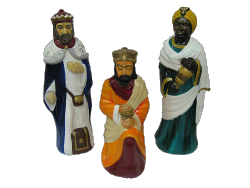
from flickr.com Micah68. Some rights reserved. Used by permission

Here is a recording of the message given at Lake Tahoe Community Presbyterian church on January 12, 2014. We examine just how wise those wise men were.

Download a recording of the message (right click and save for later listening.)

Based on Matthew 2:1-12.